

Ad
Featured
RR governing body approves budget, infrastructure projects
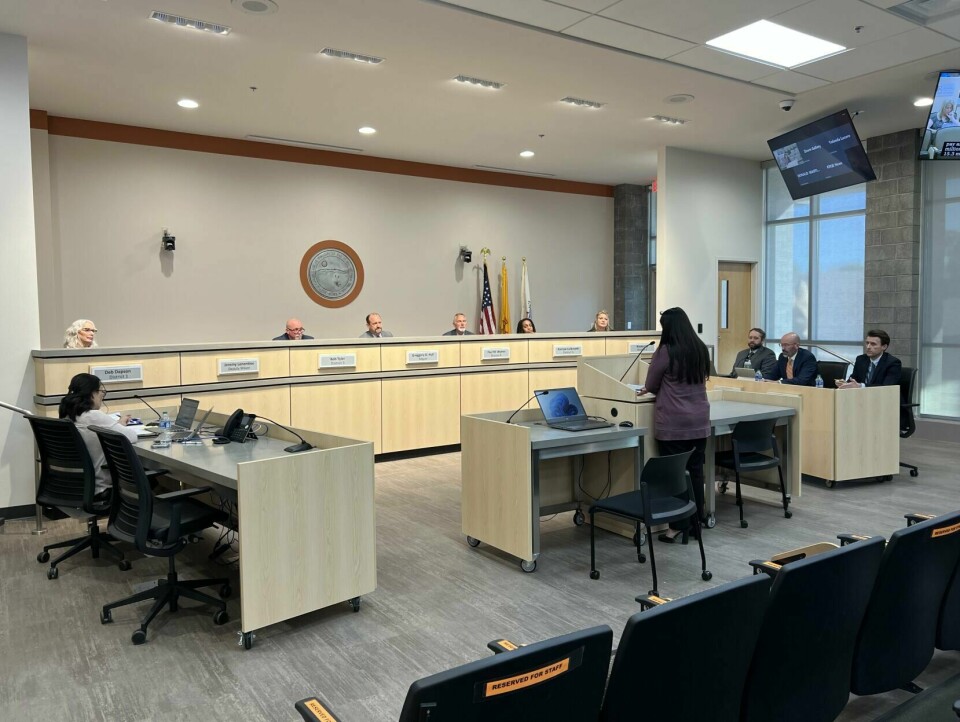
Carole Jaramillo, director of the department of financial services for the city of Rio Rancho, gives a presentation on next year's budget to members of the Governing Body during its regular meeting May 22.
Published
Modified
RIO RANCHO — The Rio Rancho Governing Body adopted next year’s budget and a package of infrastructure projects Thursday with the understanding that city staff might ask members to make adjustments later this year depending on how the economy shapes up.
The council approved separate resolutions adopting the 2026 fiscal year balanced budget as well as the infrastructure and capital improvement plan for 2026-30. It was welcome news from Rio Rancho City Manager Matthew Geisel.
“We’re obviously very excited that the Governing Body affirmed the whole process,” Geisel said in an interview. “It’s always a well-thought-out, conservative budget to live within our means — but also to be able to deliver the services the community looks for from us. I think it’s an affirmation that we built a good budget with their input and their support.”
Now, city staff are directed to complete the Fiscal Year 2026 Balanced Budget for submission to the New Mexico Department of Finance and Administration, according to Geisel.
His comments came a day before the city announced Friday that its financial services department was recognized for its budget document for the 19th year in a row by the Government Finance Officers Association of the United States and Canada.
During the May 22 meeting, District 1 Councilor Deborah Dapson, District 3 Councilor Bob Tyler, District 4 Councilor Paul Wymer, District 5 Councilor Karissa Culbreath and District 6 Councilor Nicole List all voted in favor of the resolutions approving the budget and capital projects. Mayor Gregg Hull, who approved, cast votes since District 2 Councilor and Deputy Mayor Jeremy Lenentine was absent.
Members of the public did not submit comments on either item despite designated time for a hearing during Thursday’s meeting.
The $158.8 million budget, effective July 1, 2025, through June 30, 2026, and a $690.9 million capital program, effective July 1, 2026, through June 30, 2030, were submitted April 15 by Geisel for Hull to review and respond by April 25.
In an April 15 letter to Hull and councilors, Geisel called the budget proposal “a snapshot in time,” and gathering more data in the coming weeks and months on new economic activity, such as inflation, tariffs and a potential recession, may necessitate the council’s adjustment of the budget.
When asked by the Observer May 22 about how the economy might impact the budget, Geisel cited economists, whom he said believe there is “a lot of noise in the data right now.”
Ad
“(There are) a lot of contradicting signs in the very broad macroeconomics,” Geisel said. “I think it’s too early to tell.”
He added that the city typically budgets conservatively on purpose, which helps Rio Rancho.
Culbreath wrote in a May 1 email distributed to her fellow councilors that she appreciated the city staff’s “conservative approach to budgeting because the global and local markets are highly volatile.”
City departments crafted budget proposals using last year’s budget as a framework and only added items that reflected city’s strategic plan, Geisel said. These items include several new positions — three police officers, a lieutenant, a crime scene technician, a public works division project manager, a public facilities custodian and an employee and labor relations specialist.
New capital projects include $12.9 million in road projects, including a roundabout at Silent Spring Drive; $9.5 million in wastewater carry and treatment plant improvements; $1.9 million in construction of a new phase of Unser Boulevard; and almost $1 million in building improvements, including to City Hall and Loma Colorado and Esther Bone libraries.
Noncapital projects in the budget proposal include a city-run emergency communications center, an after-school youth program and a pilot program for home purchase down payment assistance for city employees.
Geisel said during the May 2 meeting that the down payment program recognizes employees who have lived in the city for a long time and are continuing to see an increase in the cost of housing. Programmatic details are yet to be determined, he said.


